Perspective We Could Use; Missing My Dad

My dad passed away 14 years ago this week.  About a decade before that, he suffered a stroke that slowed him physically but didn’t stop the way he drew insights (although it did remove some of his filters which produced some surprisingly humorous outcomes). His spark was still there. He had a way of pulling together threads no one else thought to connect, and even after the stroke, he could cut through complexity with a clarity that made you stop and rethink your positions.

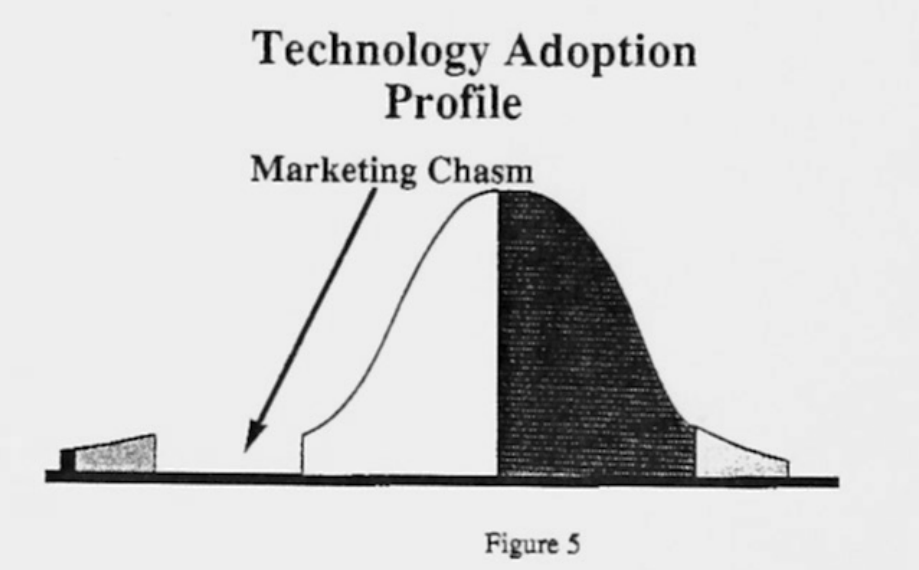
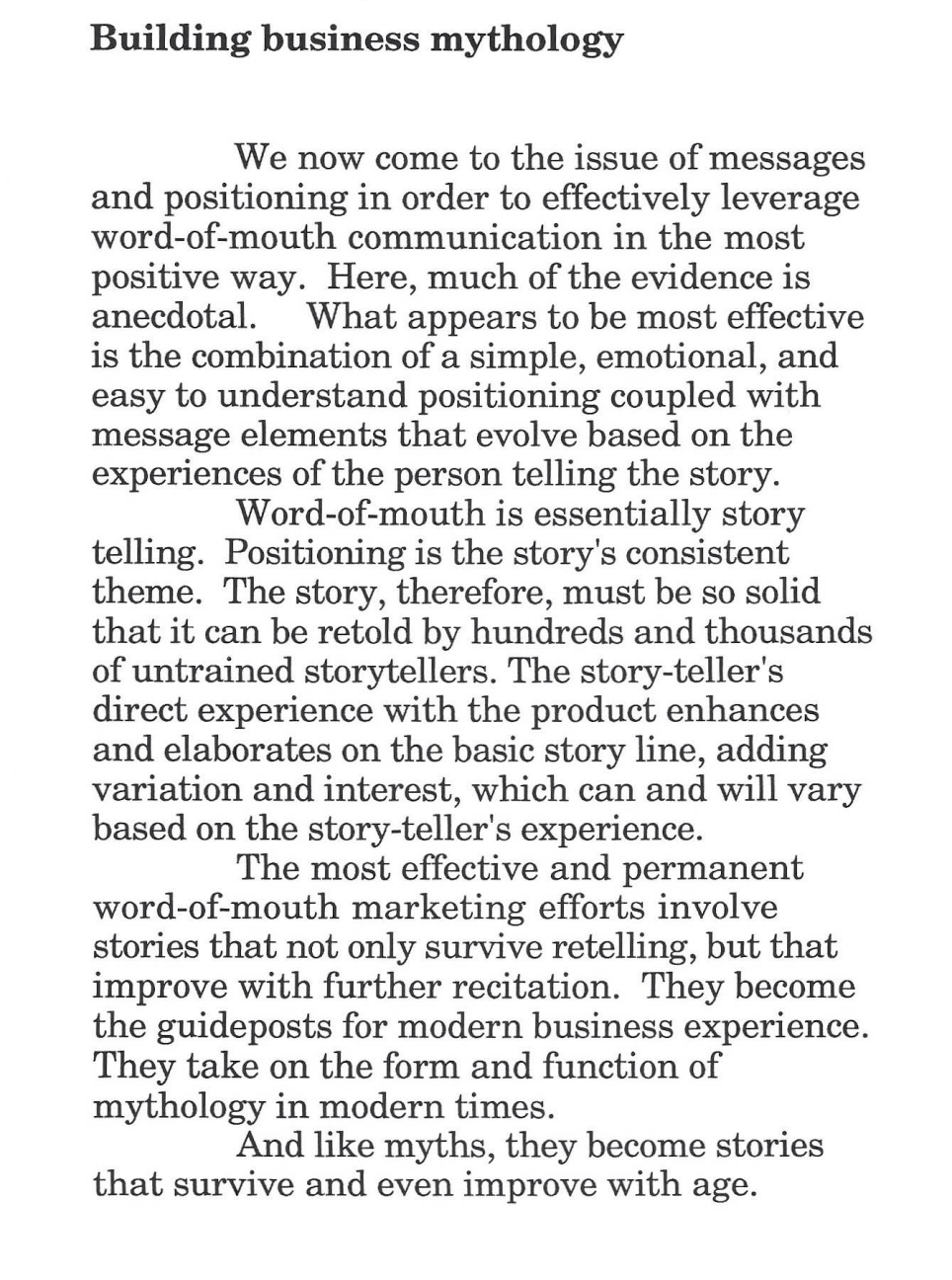
He was one of the creators of the original concept of “crossing the chasm” — the framework Geoffrey Moore later popularized in his book (original product here and here  – I continue to appreciate Warren Schirtzinger’s passion around maintaining that history). The idea that technology adoption moves differently, that those products that have the greatest early success tend to stall out before going mainstream, was theirs. That kind of insight wasn’t born from reading one market report or trend piece. It came from years of seeing patterns where others saw noise, of spotting trajectories when everyone else was focused on the present moment.

Image from 8/23/89 (36 years ago this week!)

That was my dad’s gift: perspective based on deep experience and wisdom from a history of seeing trends in the static where most just saw what was right in front of them. He could look across disciplines — business, politics, technology, science, human behavior — and connect dots that seemed unrelated until he put them together. It wasn’t just foresight; It was synthesis.  He was the ultimate example of David’s Epstein’s Range which may explain why it is one of my favorite books.

Today, in the middle of the AI revolution, I can’t help but think how much the world could use his mind. We’re in a moment where the pace of change is faster than our ability to interpret it. Every week brings new breakthroughs, new promises, new anxieties. There’s an event horizon that most of us can’t see over that has shrunk from decades to years to quarters and now to months as the pace of change accelerates. Models can summarize, remix, and predict, but they can’t provide meaning. They can’t tell us what matters, what’s durable, what’s just noise. 

That requires humans who have the scar tissue of experience, who have lived through cycles of hype and disillusionment, who can see not just the product demo in front of them but the trajectory it suggests. My dad was one of those people. And if he were here today, I know he would have a great perspective — and would provide it to me and anyone who would listen — to make sense of what AI means beyond the headlines.

So yes, I miss him because he was my dad. I miss his humor, his encouragement, his presence. But I also miss him for what the world could use right now: a steady voice of perspective in the middle of chaos, a connector of dots when the picture feels fragmented, someone who could see beyond the event horizon and help us chart a course.

In an age where AI is amplifying everything — both the noise and the signal — the ability to find clarity has never been more valuable. That was his superpower; I really miss him.

“The process of change that drives market leadership” – Lee James (March, 1989)

Agents: Names Matter

This post is part of an ongoing series about what we’ve learned from augmenting our team with agents. This series shares hard-won lessons from integrating agents into our team. It’s not theory—it’s transformation, in motion.

AI agents struggle to succeed when you treat them like tools. We know this because we’ve been down this path, and 82% of enterprise led agentic projects are shelved after 12 months. “FastTrack Tool #17” won’t spark enthusiasm and drive usage. But Reese and Casey? They changed the conversation.

Here’s what we’ve learned by doing the work:

1. Personas Build Teammates

When we first started talking about agents, the most common reaction wasn’t excitement—there was an undercurrent of fear and anxiety. People worried they’d be replaced.

But after we introduced Casey as a teammate, things shifted. The conversation became: “How can we help Casey succeed and do more for us?” That reframing worked because Casey felt like a person, a part of the team—not a bot.

2. Onboarding, Not Launching

We learned quickly that you don’t launch a teammate—you onboard them.

For us, that meant treating agents with the same discipline as new hires: communication plans, awareness sessions, training, and buddy systems. Adoption improves the moment you stop thinking “tool release” and start thinking “new colleague.” 

We do regular reviews with our agents’ performance, just like we do with the rest of the team – more frequent right after onboarding (or iterations of new capabilities, just like promotions).  Less frequent as our agents get more experience.

3. Scaling Agents Comes with Responsibility

At first, agents were treated casually—something that was just a test, that could be turned on or off at will. That didn’t work.

Now, our agents are roles on the org chart. Adding or retiring an agent requires a process, because their work has real dependencies. One person’s frustration shouldn’t lead to Winston being deleted on a Friday afternoon any more than it should lead to a human being walked out the door.  We need to put the same thought, coaching, iteration, and decision process into all of our teammates; human or not.

4. Personas Force Clarity

Our early experiments taught us that tool development drifts—overlap, redundancy, and confusion creep in. But personifying agents forces sharper thinking.

When Mona “graduated” from a personal helper to a team-level role, we treated it like a promotion. We clarified scope, aligned expectations, set up an owner (manager), and eliminated overlap. Without that discipline, grassroots innovation can quickly tip into chaos (more on this in a future post).

The Big Lesson

This isn’t theory. This is earned wisdom that we’ve learned by doing.

Giving your agents personas isn’t just branding—it’s adoption strategy, trust-building, team culture, and organizational clarity.

Because when an agent stops being Tool #17 and starts being Theo, your team doesn’t ask “Do we need this?” anymore. They ask “How do we help them thrive?”

What the heck is a “Comma Day”?

June 25th was 1,000 consecutive days of running. Rain or heat, travel or illness, airports or altitude — every day, for nearly three years, I’ve pulled on my shoes and gotten it done.

I didn’t start with a target of 1,000 days. I started with my daughter, Carrington, asking if I’d do a running streak for the month of October.   I told her that I didn’t like streaks, I’d done one before, and I didn’t want to commit to it.  She countered with “Let’s run ’til the end of the year then”…which was more days. The next day we got up and ran; I haven’t stopped. 

Doing Hard Things, So You’re Ready When Life Gets Hard

A core part of this streak is proving I can do hard things — because life often throws you something you didn’t see coming. And when it does, I want to have the reps to know I can handle it. Some wait to rise to the occasion. I’d rather train for it.

Running every day sounds simple. But simple doesn’t mean easy. It means making the hard choice daily — when it’s dark, when it’s cold, when the day has already been long.

“Hard choices, easy life. Easy choices, hard life.” – Jerzy Gregorek

Consistency Compounds — In Everything

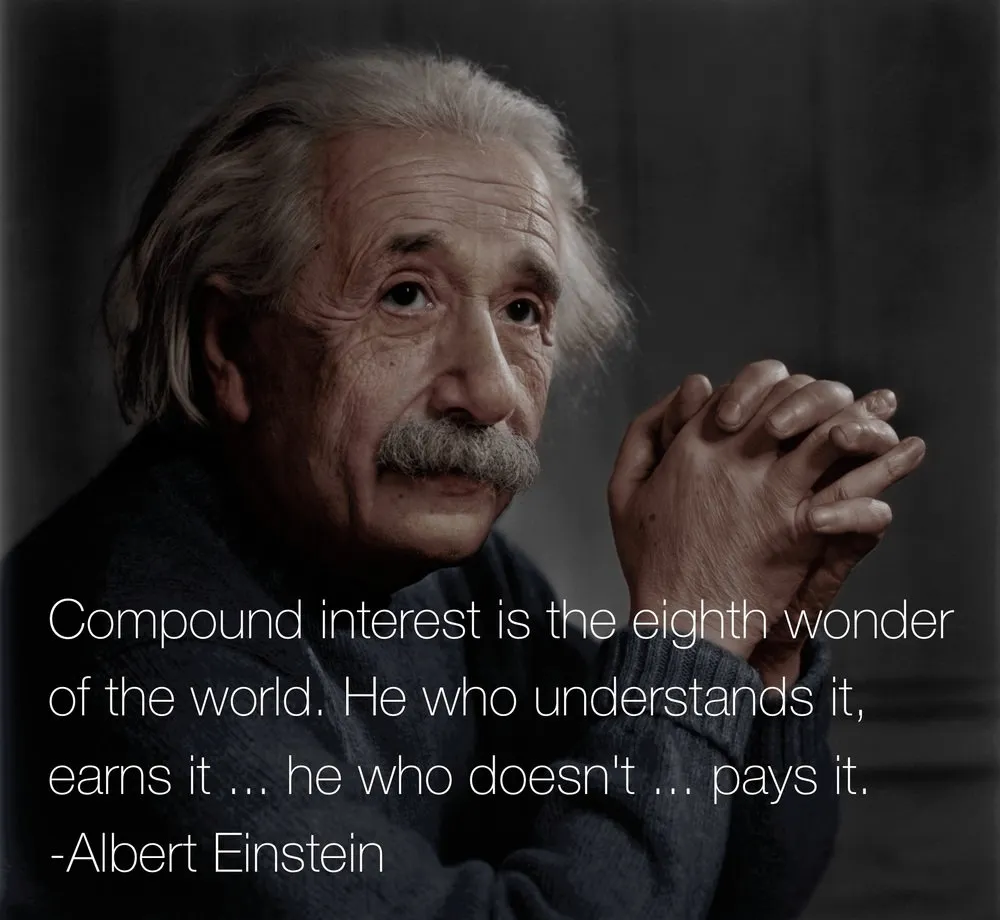
This isn’t just about fitness. Consistency spills everywhere. My health is better. I sleep more soundly. I think more clearly. I’m more patient with my family. I’m more focused at work. Consistency isn’t a life hack. It’s a way of showing the world — and yourself — that you can be trusted with momentum. The return on consistency definitely isn’t immediate. But like compound interest, it becomes undeniable over time.

“We are what we repeatedly do. Excellence, then, is not an act but a habit.” – Aristotle

The Groove: When It Becomes Who You Are

People think habits mean you stop thinking. But if anything, running every day for 1,000 days has required more thought. Every single day takes planning. Foresight. Sometimes anxiety.

The world doesn’t always cooperate. Meetings run over. New deadlines show up with no warning. Flights get delayed. Traffic ruins your window. Family needs you when you didn’t expect it.

And yet — the run still has to happen. So you adjust. You improvise. You learn to stay calm and evaluate tradeoffs instead of panicking. Sometimes it’s a sunrise run before a packed day. Sometimes it’s laps in a hotel parking lot at 11:40pm because that’s all you’ve got.

This isn’t automation. It’s resilience wrapped in rhythm. That’s the real groove. Not just routine — adaptable consistency. And eventually, not running feels stranger than running. It’s who you are. Even when life tries to interrupt — especially then.

“Discipline equals freedom.” – Jocko Willink

The Daily Problem Solving (and Why It Matters)

Michael Easter, in The Comfort Crisis, talks about how modern life makes us soft — and how intentionally doing hard things builds not just grit, but perspective. Running every day isn’t just physical. It’s a daily mental puzzle.

I’ve had to solve a small logistics riddle almost every day for the past 1,000 days.
When do I run? Where? What’s the weather? What if meetings run late? What if I want to play golf? What if I’m traveling and stuck at O’Hare, Terminal 2, with five hours of jet lag and one really sore knee?

This streak hasn’t just made me fitter. It’s brought sharpness.  Resourcefulness.
Because if you can figure out how to fit in a 30-minute run every single day for 1,000 days, you start to realize most other “problems” in life aren’t that hard.   They only feel hard when they’re the only problem you have.

Now? They’re just another scheduling challenge. I already solve those daily.
Running forced me to build a system — a muscle — for staying calm, adapting, and getting it done. Without transferring anxiety to those around you (“you run yet?”  “Nope, but I know I will”) And that system transfers. To work. To parenting. To golf. To the days I have a 6am meeting, a dinner event, and want both legs to still work tomorrow. It’s not just a run. It’s resilience training in disguise.

“If you can run every day for 1,000 days, most problems aren’t problems anymore. They’re just logistics.” – Jeff James

The 100 Days I Didn’t Want to Run (But Did Anyway)

Out of 1,000 runs, I’d guess at least 100 were on days I didn’t want to go. Sick. Sore. Traveling. Mentally elsewhere. Those were the quiet victories. Some days it flowed. Most days it didn’t. And a few… were hell. Here were the worst of the worst. Three days I’ll never forget — and still love that I figured out how to get it done!

Top 3 Worst Runs:

  • 3rd Worst: Travel day in Madeira, Portugal – 6am flight to Lisbon, connecting flight to Boston, connecting flight to Seattle arriving just before 10pm.  Do I try and sneak in a couple of miles in the airport during a layover (and fly in dried sweat the rest of the trip)?  Do I let it sit in my brain for the 24 hours of travel and try and knock it out when we get home (what if there’s a delay?)  Nah, just get up at 3:15am and bang it out: https://www.strava.com/activities/14380983681
  • 2nd Worst: Day of the L’etape – Get up at 5am to shuttle to the start of the stage, ride 98 miles climbing 13k of elevation (in 100+ degree weather), finish right before the broom wagon, collapse in the chalet for an hour, shower, eat dinner, have a beer…and then lace ’em up: https://www.strava.com/activities/9421146101
  • Worst: Men in their 50s require a certain procedure to make sure everything is healthy.  You run before the prep starts the day before, you have the procedure, you go to Chipotle, then you go for a run – isn’t that how everyone does it?   https://www.strava.com/activities/10173813333

To be clear, there were amazing runs over the past 1000 as well, like https://www.strava.com/activities/10063795999, and https://www.strava.com/activities/13737378104, and https://www.strava.com/activities/8506328411, and https://www.strava.com/activities/10924927816.

“The only way out is through.” – Robert Frost

Gratitude: This Was Never a Solo Sport

The most important truth? I didn’t do this alone.

There were weekends when I disappeared for a run during family time. Days when I snuck it in late, while others waited for dinner. Mornings when I was quiet, tired, distracted — but still got the nod of encouragement. I owe every one of those moments to my family. And most of all, to my wife. She’s been patient, supportive, understanding… and probably rolled her eyes more than once. She’s my biggest fan and my best friend.

There is no 1,000-day streak without her.  There is no happiness without her.

The Next 1,000? Maybe. Maybe Not.

This streak doesn’t define me. But it’s become a mirror — one that shows me who I am when no one’s watching. When I’m tired. When it’s inconvenient. When it’s easier to skip.

And what I see in that mirror now… is someone who doesn’t quit.

“Age wrinkles the body. Quitting wrinkles the soul.” – Douglas MacArthur

How do you celebrate Comma Day?  That's the topic of another post, but trust me it should be as crazy as the process of getting there !
Despecialization is the new Superpower

Why AI Agents Reward Infielders, Not Aces

I was listening to Charles Lamanna on Soma’s Founded & Funded podcast on Monday , and his point about despecialization really hit home.

It’s rare that a single comment ties together your career, your instincts, and your favorite bookshelf reads. But this one did. Charles argued that AI is shifting value away from hyper-specialized skills and toward flexible, cross-disciplinary thinking. Generalists—what I’d call “infielders”—are suddenly in demand.

And I couldn’t nod hard enough.

A Bias, Confirmed

To be fair, this plays into every bias I have. I’m a self-identified “just enough depth to be dangerous” operator. My value hasn’t come from mastering a narrow domain, but from stitching together patterns across finance, tech, operations, change management, sales, and many others. Reading Range by David Epstein felt like someone had written my career into a defense memo. Lamanna just gave it a business case.

Why now?

Because AI agents are replacing the white-collar specialists.

  • Not the CMO, but the copywriter.
  • Not the VP of Data, but the analyst building dashboards.
  • Not the strategy consultant, but the associate churning slides.

Tasks that once demanded focused expertise can now be delegated to AI agents—faster, cheaper, and increasingly better. When that happens, the edge shifts to the person who can connect those outputs, not just create them. Can think of how to use them in new and different ways. Generalists who know enough to be dangerous across multiple domains are the new integrators.

Agents Accelerate the Shift

We’re not seeing a skills apocalypse. We’re seeing a redistribution. The person who was great at “one thing” now shares that lane with an agent. But the person who can see across lanes, adjust the play, and call the audible? That person is now running the whole offense.

This reframes the AI conversation. The goal isn’t to master every model or become an AI prompt savant. It’s to build systems of agents—and then figure out how to manage those systems with judgment, context, and creativity.

That’s not about coding. That’s about ownership.

A Nod to Jocko

It’s no coincidence that both Charles and Soma reference “extreme ownership” in their conversation. The phrase, coined by Jocko Willink, isn’t just leadership advice. It’s a survival skill in this AI-enabled world.

When the tools can do the work, the work becomes about accountability. You don’t get to say “that wasn’t my job”—because now your job is making the whole thing run. That’s leadership at every level.

Extreme Ownership was the book that made me a Jocko fan. This podcast just brought that mindset to AI.

The Generalist Advantage

So, where does that leave us?

  • Generalists are getting the opportunity to scale.
  • Leaders are taking ownership of complex, agent-powered systems.
  • Organizations are starting to value adaptability over mastery.
  • Specialists are looking up and out —or being replaced.

And people like me? We’re finally not apologizing for being “a little bit of everything.” We’re leaning in.

Because in the world of AI , it turns out the infielders are running the game.

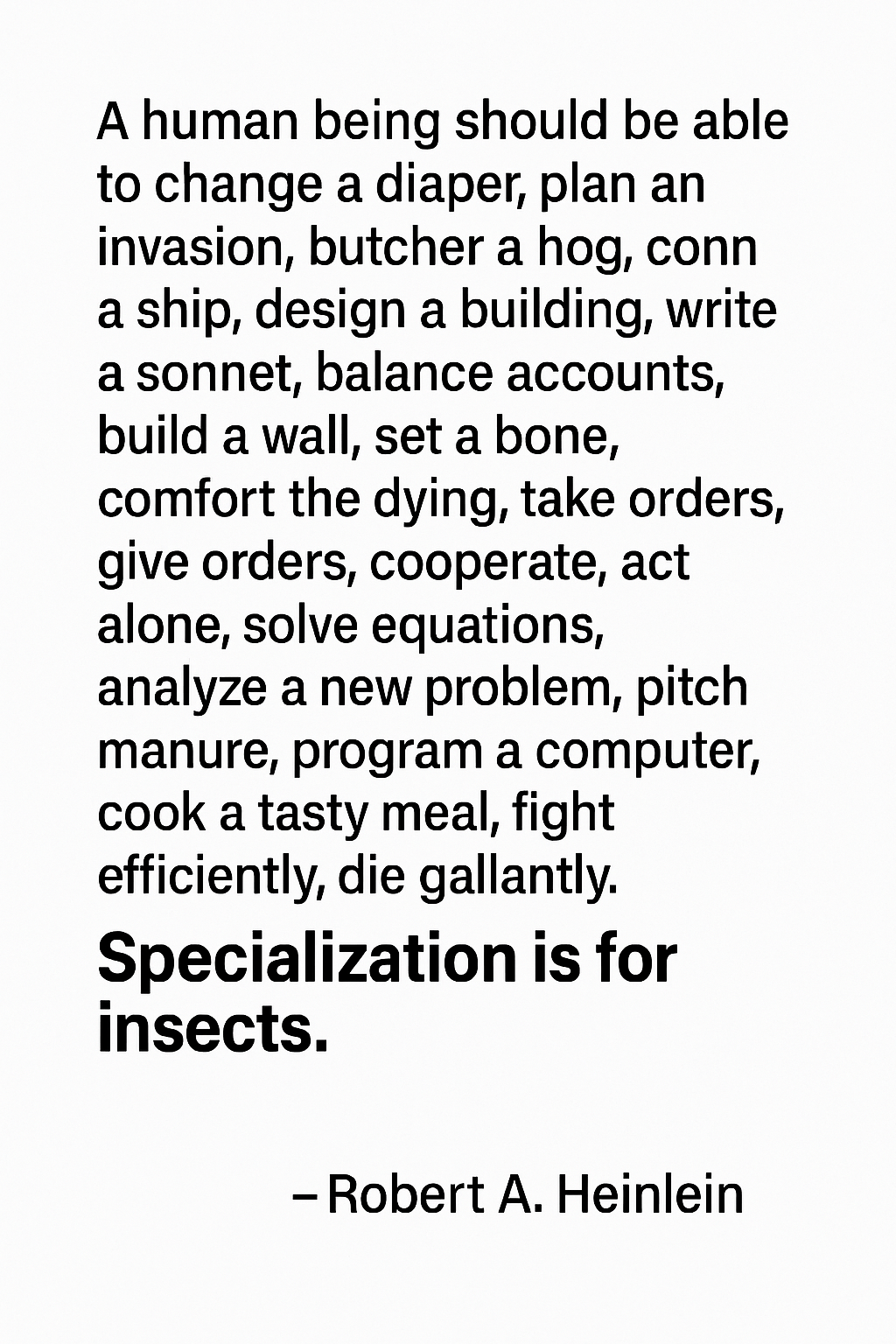
#AIagents #FutureOfWork #GeneralistVsSpecialist #Despecialization #ArtificialIntelligence #WorkplaceTransformation #CareerStrategy #Productivity #LeadershipMindset #RobertHeinlein

The Compound Interest of Productivity

AI Agents Are the New Leverage

Productivity tools have long promised to make work easier.
Most deliver accumulation—you stack features, shortcuts, and automations, each adding a marginal gain.

Helpful? Sure.
Transformational? Not really.

But what if, instead of stacking, we could compound?

That’s what AI agents offer

From Tasks to Systems

Start with the small stuff:

  • An agent that filters email.
  • Another that summarizes meetings.
  • A third that drafts follow-ups.

Alone? Nice-to-haves.
Together? They form a system.

The output of one becomes the input of the next. A peloton, not a solo rider. And once that loop forms, you’ve crossed a threshold—from isolated tasks to an adaptive system that gets smarter with each pass. This isn’t just automation—it’s orchestration.

Agents don’t just execute. They learn. They adapt. They cooperate.

Each one adds leverage. Each one amplifies the others.

You’re not saving time. you’re building momentum.

The more agents you connect, the more capable the system becomes.
You go from incremental gains to exponential lift.

Accumulation vs Compounding

We started with a handful of lightweight agents. One evaluated incoming requests and scored them. One updated case notes and status. One checked case hygiene. Another populated task lists and project plans.

Individually? Fine. Connected? Something else entirely.

Work got faster. Work scaled to more customers. Work got smarter.

The system started making decisions:

  • with better quality
  • with greater outcomes
  • across more customers

We’re crossing a threshold in how we work. Productivity isn’t about brute force anymore—
It’s about systems that interoperate and learn.

Agents are the first technology that mirrors how nature builds: organically, iteratively, through networks that adapt and strengthen over time. Each agent you create doesn’t just add function—it adds force.

Future-proof your productivity, start building small agents today.
Connect them.
Let them learn.
Let them compound.

The AI Revolution is here – and it is the savior

I saw some of the fallout of the interview with Dario Amodie yesterday and one of his key attention grabbers was:

“unemployment will spike to 20% in the near future”

On my team, we’re driving hard and fast into onboarding agents (more on that soon), and in doing so, we’re building earned wisdom, not just hypothetical or philosophical views.

His statement made me pause—not because it’s dramatic, but because it’s directionally right and emotionally wrong. There’s a better thought exercise to pursue:

AI won’t just disrupt jobs – it will accelerate the creation of their replacement.

The uncertainty around AI is due to the rate of change—and how fast that rate is itself accelerating.

If you consider past paradigm shifts, they all disrupted the existing workforce massively, but slowly:

  • The Mainframe
  • The PC
  • The Internet
  • Mobile
  • The wheel, fire, electricity…

These changes all transformed industries. They put people out of work—but not forever. No one today is training to be a switchboard operator. People adapted.

The fear with AI, especially Agentic AI, is that those changes are happening in days or weeks instead of years or decades. But this isn’t like past tech waves where new roles emerged slowly.

The technology that is disrupting everything is part of everything.

This means that AI will help design, build, and onboard the future of work in real time. It will empower people to adapt faster, create faster, and solve problems from every angle—not just the top down.

This is the key difference that gives me great hope from working in real time with AI ; the disruptor is the savior all in one, and it brings the power to help those that are disrupted.

AI is driving disruption centrally within organizations, but we are adapting in a decentralized way – AI is enabling those that are getting on board to create systems, training, opportunities, and resiliency for the new future.

This is the first decentralized industrial revolution. Don’t miss it

Dante Alighieri Quote: “Wisdom is earned, not given.”